- Home /
- Guides/ Accessories/ How to choose a card binder: portfolio, pro-binder or zip binder
How to choose a card binder: portfolio, pro-binder or zip binder
The most important word when choosing a binder for trading cards is side-loading. Pages that open at the top drop cards as soon as the binder is turned, and that is what most binder accidents look like. After that, the number of pockets per page decides how many cards fit, and the binder's construction decides how well it holds together over time.
Quick facts
| Most important feature | Side-loading pockets |
|---|---|
| Standard per page | Nine pockets |
| A 9-pocket pro-binder | Normally holds 360 cards |
| Material to look for | Acid-free and plasticiser-free |
| Pages for ring binders | Three or eleven holes |
| Most common mistake | An overfilled binder that won't close |
The four levels
| Portfolio | Soft binder with pages sewn in, and the pages are included. Cheapest. The pockets are often top-loading. |
|---|---|
| Pro-binder | Padded binder with side-loading pockets in fixed pages that are included. The cards can't fall out. The standard choice. |
| Zip binder | A pro-binder with a zip around the whole binder, and the pages are included. Best protection against dust and against anything falling out. |
| Ring binder | The binder comes without pockets, and you buy the pages yourself. You can add pages as you go, but the rings can press marks into the cards closest to the spine. |
Pockets per page
| Two | Two cards per page in a small binder. Ultra Pro's Eclipse with two pockets holds 80 cards. |
|---|---|
| Four | Two by two standard-size cards per page, in a smaller binder. Works well for a selection or a smaller collection. Ultra Pro's 4-pocket portfolios for Pokémon also have room for four jumbo cards, but the pockets themselves are for regular cards. |
| Nine | Three by three cards per page, the standard for standard-size cards. A spread shows eighteen cards. |
| Twelve | Three cards across and four down per page, in a larger binder. It takes sleeved standard-size cards, and a spread shows twenty-four cards. |
| Eighteen | Nine pockets on each side of the page, eighteen cards per page, often with a black backing so that only the fronts of the cards show. |
Capacity
Work out what you need before you buy, since a full binder can't be expanded. A modern set is often a couple of hundred cards, which means a 360-card binder if you want room for variants.
Brands count differently. Some state pockets per page, that is 9-pocket or 12-pocket, while others put the total number of cards in the name, such as 160, 360 or 576. A 9-pocket pro-binder normally holds 360 cards, that is twenty pages with eighteen cards per spread.
Ultra Pro's binders: what the names mean
Ultra Pro has the most binders on the shelf, and the name shows which construction the binder has. Portfolio and PRO-Binder are two different constructions. Eclipse, Elite Series and Premium are variants of the PRO-Binder. Album is the ring binder you fill with loose pages.
Portfolio
A softer binder with fixed pages, and cheaper than a PRO-Binder. Ultra Pro's portfolios with Pokémon designs have nine or four pockets per page. A 9-pocket holds 90 to 126 cards with one card per pocket, depending on the model, and twice as many if the cards are placed back to back. A 4-pocket holds 40 cards, or 80 back to back, and has extra pockets for four jumbo cards. The Collectors Portfolio has top-loading, clear pockets.
PRO-Binder
Ultra Pro's binder with side-loading pockets in twenty fixed pages. The opening on the side and a low-friction material keep the cards in place when the binder is turned, and an elastic strap keeps it closed. A 9-pocket PRO-Binder holds 360 standard-size cards. The pages are acid-free, archival-safe and PVC-free.
Eclipse PRO-Binder
Eclipse is a PRO-Binder with black pages. The black, embossed material between the pockets gives each card a frame and grips the sleeve so that it does not slide. It comes with 2, 4, 9 and 12 pockets per page and holds 80, 160, 360 and 480 cards in Deck Protector sleeves. The colour in the name, such as Jet Black or Arctic White, refers to the cover.
The 2-pocket is the smallest Eclipse binder, with two side-loading pockets per page. It measures approx. 13 × 16 × 1 cm and fits in a jacket pocket, so it is made for a few cards you take with you from home, for example a sideboard or cards for trading. The larger Eclipse binders work well for a collection that stays at home.
Elite Series
Elite Series is a PRO-Binder with a zip around the whole binder and a padded faux leather cover with foil stamping. Inside are twenty side-loading pages with a black backing: the 9-pocket holds 360 sleeved cards and the 12-pocket 480. The zip is the difference from a regular PRO-Binder, which closes with an elastic strap.
Premium PRO-Binder and Premium Snap Binder
Premium means a cover in padded faux leather. The Poké Ball Premium 9-Pocket PRO-Binder has a stitched Poké Ball design, closes with an elastic strap and holds 360 sleeved cards. The Premium Snap Binder has 4-pocket pages for 160 sleeved cards and closes with a snap clasp shaped like a Poké Ball. The Zippered Toploader Premium PRO-Binder has pockets made for toploaders and holds 180 cards in toploaders.
Album 2 inch
Ultra Pro's album is a ring binder with two-inch D-rings and is sold without pages. It takes 3-hole binder pages such as Silver Series, and Ultra Pro also sells the eleven-hole Platinum pages together with its album. The album is the better choice when you want to expand and re-sort the collection, since the PRO-Binder and portfolio have fixed pages.
Ultimate Guard's Zipfolio
Zipfolio is Ultimate Guard's binder with a zip around the whole binder. It closes completely and therefore protects the cards better than a regular binder. The surface is Xenoskin, Ultimate Guard's hard-wearing surface material.
Zipfolio 480 has 24 side-loading pockets per spread and holds 480 cards. The pockets sit in rows of four, so a playset of four copies of the same card ends up side by side. The binder measures 351 × 330 × 30 mm. The pockets are made for double-sleeved cards in Ultimate Guard's own sleeves, in standard size or Japanese size, and the capacity applies to those. If you collect a set in number order, you usually choose a binder with nine pockets per page instead.
Binder pages bought separately
| Silver | Ultra Pro's clear pages in a box of 100. The same material and welds as Platinum. |
|---|---|
| Platinum | Ultra Pro's flagship, in the thickest and clearest film. |
| Premium and secure | Extra edge reinforcement or locking so the cards sit more securely. |
| Slab pages | Larger pockets, for graded cards in slabs. |
| Side-loading | Opening on the side. Safer for the same reason as with binders. |
| Top-loading | Opening at the top. Cheaper but drops cards when the binder is turned. |
Platinum Series or Silver Series
Platinum Series is Ultra Pro's flagship among binder pages, made from the thickest and clearest film in their range. Silver Series is made from clear film. Both are PVC-free polypropylene, acid-free and archival-safe, and have nine top-loading pockets, welds that keep the page flat and Ultra Pro's hologram on the back. Platinum is sold in packs of ten pages with eleven holes, Silver in a box of a hundred.
Dragon Shield's 18-pocket pages
Dragon Shield's pages have nine side-loading pockets on each side, eighteen cards per page, against a black background. The plastic is folded around the right edge of the page instead of welded, which gives a soft edge. The pages have eleven holes, and the box of 50 pages holds 900 cards.
The difference from Ultra Pro's Silver Series and Platinum Series is the loading and the background. Ultra Pro's pages have nine top-loading pockets and are clear, so the cards can be seen from both sides. Dragon Shield's side-loading pockets keep the cards in place when the page is turned, and the black background means that only the fronts of the cards show.
Choose the size of the binder
Start with how many cards are going in and whether the collection needs to be able to grow. A binder with fixed pages has its limit from the start, while a ring binder is expanded with more pages. The size is given as pockets per page, and the capacity follows from it.
| 2 pockets per page | The Eclipse PRO-Binder 2-pocket holds 80 cards in sleeves and fits in a jacket pocket. For a few cards you take with you from home. |
|---|---|
| 4 pockets per page | A portfolio holds 40 cards, or 80 back to back. A PRO-Binder with four pockets holds 160 sleeved cards. |
| 9 pockets per page | The standard. A PRO-Binder holds 360 cards in twenty pages. |
| 12 pockets per page | Eclipse and Elite Series hold 480 sleeved cards. |
| 24 pockets per spread | Zipfolio 480 holds 480 double-sleeved cards, with playsets of four in a row. |
| 18 pockets per page | Loose pages for ring binders, nine on each side. A box of 50 pages holds 900 cards. |
Ring binder with D-rings or fixed pages
The PRO-Binder, Elite Series, Zipfolio and portfolio have pages that are fixed in place. The capacity is stated on the binder and can't be expanded, so allow room for variants when you buy. A ring binder is sold without pages and is filled with loose binder pages, so the collection can grow and be re-sorted. Ultra Pro's album has D-rings and takes 3-hole pages. Leave the slots closest to the spine empty, since the rings can press marks into the cards there.
What 2 inch means
Two inches on Ultra Pro's album is the size of the D-rings, not of the binder. Larger rings hold more pages, and how many cards the album holds depends on how many pages you put in and how many pockets they have.
Materials and how long they last
Check the material when the cards will stay in the binder for several years. Look for a statement that the material is acid-free and plasticiser-free. Plasticisers in cheap plastic migrate into the card's surface over the years and leave sticky or discoloured spots that can't be removed. All well-known brands meet this, but it is worth checking with unknown ones.
Common mistakes
- Filling a binder so full that it won't close. The pressure bends the cards.
- Putting two cards in the same sleeve. They scratch each other.
- Putting sleeved cards in pages not made for it. It gets too thick and wears the page.
- Storing the binder lying flat. Stand it up like a book.
- Storing the binder in sunlight. Both pages and cards fade.
- Choosing top-loading pages for a binder you often flip through.
Sorting the binder
- One set per binder, or per section if the binder is large.
- Follow the set's own numbering. That is how you find your way back.
- Leave gaps for cards you are missing, so the order holds.
- Keep variants next to the base card, not in a separate section.
- Write the set name on the spine if you have several binders.
Choosing
- A set you collect. 9-pocket pro-binder with side-loading pockets.
- Cards you carry with you. Zip binder.
- Bulk and duplicates. 18-pocket pages in a ring binder, or a card storage box.
- Graded cards. Slab pages in a ring binder.
- Cards in toploaders. A binder with pockets for toploaders, such as Ultra Pro's Zippered Toploader Premium PRO-Binder.
- Cheap for kids. Portfolio, but expect it to wear.
Frequently asked questions
- How many cards fit in a 9-pocket binder? Normally 360, that is twenty pages.
- Can I put sleeved cards in the binder? Yes, if the pages are made for it. Otherwise it gets too thick and wears the page.
- Do Japanese cards fit in regular pages? They slide around. Choose pages made for smaller cards.
- Why do the rings press marks into the cards? The pages closest to the spine rest against the rings. Leave those slots empty.
- Does a cheap binder hold up? For browsing and kids, yes. For long-term storage of valuable cards, no.
- Do cards get damaged in a binder? Mostly in top-loading pages. Side-loading pages keep the cards in place.
- Do the cards need sleeves in the binder? Not necessarily, but the sleeve protects the card from scratches when the page is turned.
- Do the cards fade in the binder? Not if the binder is kept closed and in the dark.
- Ring binder or bound? A ring binder can be expanded, a bound one protects better against pages coming loose.
- Do loose binder pages fit in a PRO-Binder? No. The PRO-Binder, Elite Series and portfolio have fixed pages. Loose pages such as Platinum and Silver Series go in a ring binder, for example Ultra Pro's album.
- What is the difference between Platinum Series and Silver Series? Platinum is made from Ultra Pro's thickest and clearest film. The material, welds and hologram are the same.
From our range
 Accessories
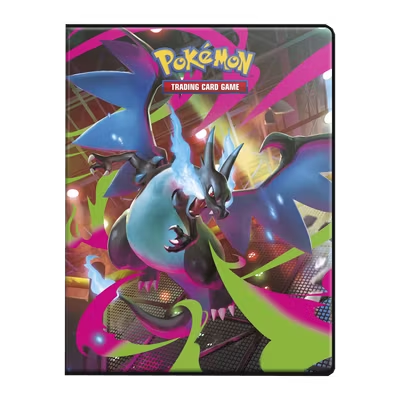
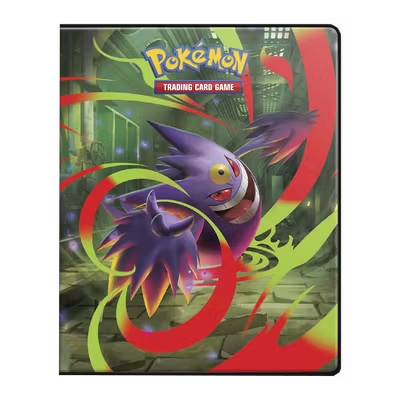
Ultra Pro 9-Pocket Portfolio – Pokémon Pikachu
Read more about how to store your collection, sleeves and accessories.
Shop: binders for trading cards and binder pages at Bangerpack.
Written by the people who run Bangerpack. Range and prices change continuously. What applies when you read this is shown in the category.