- Home /
- Guides/ Buying the right product/ Trading cards for kids: what to buy
Trading cards for children: what to buy and what to avoid
For a child who has just become interested, a small pack is almost always a better buy than a large one. The joy is in the opening, not in how much is in the box, and five small occasions beat one big one. The most common trap is an adult buying an expensive display that the child opens in ten minutes, and then the child has nothing left to look forward to.
Quick facts
| Best first purchase | Blister pack, Mini Tin or a few loose packs |
|---|---|
| Best gift | Elite Trainer Box or tin, with lots to unpack |
| Best for playing | Two ready-to-play decks, one for the child and one for you |
| Avoid at first | Expensive displays and expensive single cards |
| Most important accessory | Penny sleeves, so the favourite cards last |
By age
| Younger children | Sticker packs, blister packs and cards for swapping. Simple, cheap and durable. Albums for Marvel or Disney work in the same way as the football albums. |
|---|---|
| Middle years | Pokémon or a trading card game. This is where swapping in the school playground begins. |
| Older children | Ready-to-play decks and real games, or a collecting path they have chosen themselves. |
| Teenagers | The same products that adults buy, often with their own budget. |
How to make the first time fun
- Put down a soft surface and have card sleeves ready before you open anything.
- Open together, one pack at a time.
- Say beforehand that most cards are common cards. That makes the disappointment smaller.
- Let the child pick out a few favourites that go into a sleeve straight away.
- Keep the rest in a box, so there is something to sort another day.
Buying to play together
If you want to play, two ready-to-play decks are the single best purchase. They contain everything you need, the rules are designed to be learnt at the table, and you can start playing within a few minutes. It is a much better experience than opening packs and trying to build a deck from whatever happened to turn up.
Booster packs almost never give you a playable deck. They are made to add to a collection, not to start a game. This is the most common misunderstanding among adults who buy for children.
What children actually appreciate
- Opening several times. Five small packs beat one large box.
- Having something to swap. Duplicate cards are an asset, not rubbish.
- Their own place for the cards. A card binder or box that belongs to them.
- Playing against someone. A game is more fun with an opponent.
- Recognition. Characters or players they already like.
Common mistakes
- Buying a display as the first gift.
- Buying an expensive single card. Children rarely value cards the way adults do.
- Buying booster packs in the belief that the child will be able to play with them.
- Buying Japanese products for a child who wants to play with their friends.
- Forgetting the card sleeves, so the favourite card is ruined after a week.
Frequently asked questions
- What age are trading card games suitable for? Simplified rules work early on, but building your own deck takes a few more years.
- What does a good first purchase cost? A blister pack or a couple of loose packs is enough.
- Are cards a good gift? Yes, especially a box with several things inside, such as an Elite Trainer Box or a tin.
- Does the child need accessories? Penny sleeves are enough for a long time. See the accessories guide.
- What do I do with the duplicates? Keep them. They are the child's currency for swapping.
The formats, from cheapest to most expensive
| Loose packs | Lowest price. Good for giving several times. |
|---|---|
| Blister pack | A few packs plus a promo card. |
| Mini Tin | Small collector tin, a good gift for younger children. |
| Ready-to-play deck | Playable straight away. The best buy if you want to play. |
| Elite Trainer Box | Feels most like a gift, with several things to unpack. |
| Display | Most expensive. Rarely the right first purchase for a child. |
About swapping in the school playground
Card swaps between children are part of the hobby and almost always a good thing. Problems arise when the values are very different and a child swaps away something expensive without knowing it. A simple way to avoid this is to agree at home on which cards may be swapped and which stay in the card binder.
Another tip is to let the child have their own small stack of cards that are there specifically for swapping. That way swapping is fun without the favourite cards being at stake.
About cards and money
Cards are a hobby, not a form of saving, and it is worth saying this plainly to a child who has heard otherwise. Prices move in both directions, often quickly, and no box is guaranteed to be worth more than it costs. A child who collects because it is fun gets something out of it every time. A child who collects so that it will be worth money is almost always disappointed.
From our range
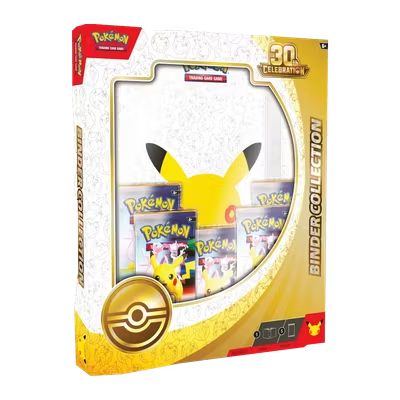 Pokémon cards
Pokémon 30th Celebration – Binder Collection
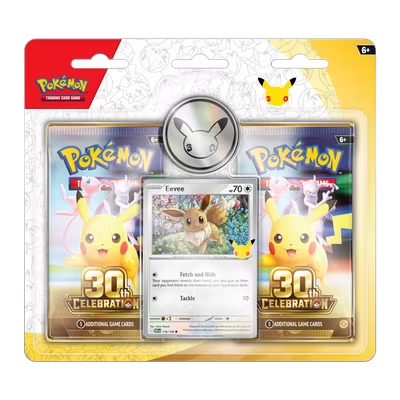 Pokémon cards
Pokémon 30th Celebration – Eevee 2-Pack Blister
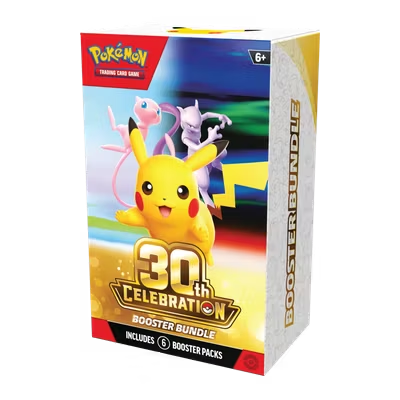 Pokémon cards
Pokémon 30th Celebration – Booster Bundle (6 boosters)
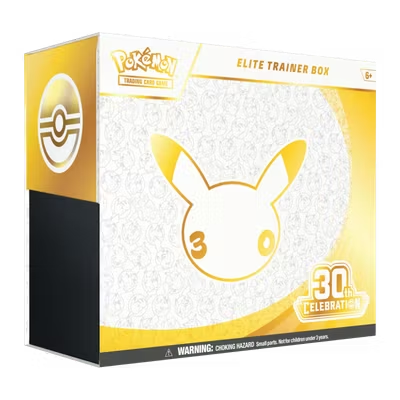 Pokémon cards
Pokémon 30th Celebration – Elite Trainer Box
Read more about how to start collecting, which Pokémon product to choose and how to open packs.
Shop: Pokémon and football cards at Bangerpack.
Written by the people who run Bangerpack. Our range and prices change continuously. What applies when you read this is shown in the category.