How to protect your cards properly
The basic rule is soft on the inside, hard on the outside. A penny sleeve against the card protects the surface from scratches and fingerprints, and a rigid holder over it protects against bending and dinged corners. A card put straight into a toploader without a penny sleeve gets scratched by the plastic, and that is the most common mistake in the hobby. This page covers the order and the handling; the products are explained in the sleeve guide and the holder guide.
Quick facts
| The basic rule | Soft inside, hard outside |
|---|---|
| Most common mistake | Card straight into a toploader without a penny sleeve |
| For grading | Penny sleeve and card saver, never a toploader |
| Biggest risk | The first half minute after opening |
| Protection from light | Only magnetic holders and screw-down cases |
The right protection for the right card
| Kept in a box | Penny sleeve. Done. |
|---|---|
| Played | Perfect fit, then deck protector. |
| Kept or sold | Penny sleeve, then toploader. |
| Sent by post | Penny sleeve, toploader, bag, rigid packaging. |
| Sent for grading | Penny sleeve, then card saver. Never a toploader, since the card has to be pulled out without bending. |
| Displayed | Magnetic holder with protection from ultraviolet light. |
| Collected in a binder | Side-loading pockets, one card per pocket. |
Let the card's value and future decide, not your gut feeling. The opposite mistake is as common as protecting too little: putting every ordinary card in a toploader costs more in accessories than the cards are worth and makes the collection impossible to browse. Bulk and duplicates are fine in a box with dividers.
A card you have just opened
- Dry your hands. Grease from fingers shows immediately on foil cards.
- Hold the card by the edges and keep it over a soft surface.
- Let it slide down into a penny sleeve. Do not push.
- Judge whether it is worth more protection. An ordinary card stops here.
- If it is valuable: let the sleeve slide down into a toploader of the right thickness.
- If it is going to be shipped: put the toploader in a bag and then between two rigid boards.
- If it is going to be graded: swap the toploader for a card saver.
The handling that makes the difference
Hold the edges, never the surfaces: a fingerprint on a foil card is hard to wipe off without risking new marks. Let the card slide into the holder instead of pushing it down, otherwise the corners get dinged against the bottom. It helps to tilt the toploader downwards while you insert the card, so it does not slip out. Open the sleeve against the light first so you can see it is not stuck together. Separate cards one at a time instead of flicking through a stack, since flicking is where corners get bent. And check that the holder has the right thickness: a card that is loose moves around and gets damaged by its own holder.
What actually ruins cards
Sunlight fades printing ink and yellows plastic, and it only shows when it is too late. Moisture makes cards curl and glue let go. Pressure from tall stacks and overfilled binders gives bent cards. Fingerprints are permanent on foil. And rubber bands leave marks that never go away. That is the only thing on the list that ruins a card in an afternoon.
The mistakes that come from the same lack of knowledge are quick to list. Card straight into a toploader without a penny sleeve. Tape on a sleeve or holder, since glue migrates and discolours. Two cards in the same sleeve, which scratch each other. A sleeve that is too big so the card moves freely. A card in a plastic bag without a rigid holder. A sleeved card stuffed into a binder page not made for it, which gets too thick and wears the page. And sending a card in an ordinary envelope, which gets bent in the sorting machine.
What the protection costs and gives
A penny sleeve is the cheapest and protects against scratches and dust. A deck protector costs more per piece and can handle shuffling and play. A toploader sits in the middle and protects against bending. A magnetic holder costs a good step more and protects against both bending and ultraviolet light. Grading is the most expensive route and gives protection plus a confirmed condition and confirmed authenticity.
Ranked from best to worst:
- Graded slab. Sealed by the grading company. Protection plus confirmed condition.
- Penny sleeve in a magnetic holder. Protects against bending, dust and ultraviolet light.
- Penny sleeve in a toploader, in a team bag. The standard for valuable cards and for shipping.
- Penny sleeve in a toploader. Protects against bending and scratches.
- Double-sleeved in a deck protector. Right for cards that are played, not for cards that are stored.
- Penny sleeve only. The basic protection. Enough for almost everything you own.
- Loose in a pile. The card will soon be damaged by its neighbours.
Frequently asked questions
- Do all cards need protection? No. Bulk is fine in a box. Protection costs money and time, so put it where it does some good.
- Can I reuse sleeves? Penny sleeves yes, if they are intact. Deck protectors should be replaced when the edges turn white.
- Which toploader fits? 35pt for ordinary cards. See the full scale in the holder guide.
- Do toploaders protect against light? No. Only magnetic holders and screw-down cases have protection from ultraviolet light.
- What do I do with a card that is already bent? Nothing that removes the bend. Lay it flat in a holder and avoid further damage.
From our range
 Accessories
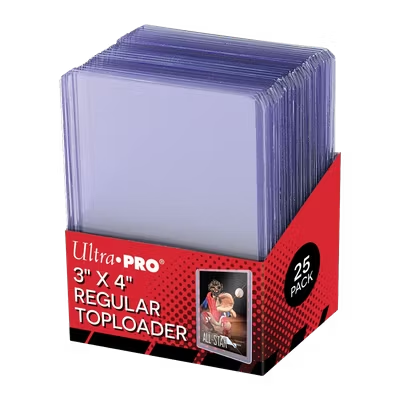
Ultra Pro Regular Toploader 3x4 – 25-pack
 Accessories
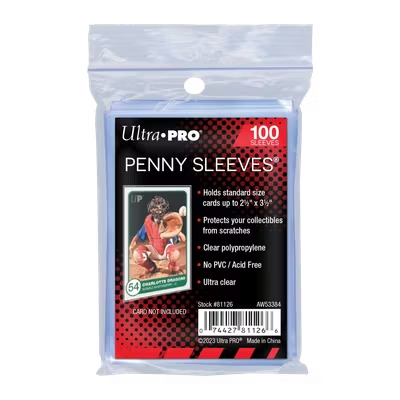
Ultra Pro Penny Sleeves – 100-pack
 Accessories
Ultra PRO Eclipse Jet Black 9-Pocket PRO-Binder
Read more about which sleeve to choose, how to open packs, how to store your collection and how to pack for shipping.
Shop: sleeves and toploaders at Bangerpack.
Written by those of us who run Bangerpack. Range and prices change continuously. What applies when you read this is shown in the category.