How to play Pokémon TCG
Two players face each other, each with a deck of 60 cards. You win by taking all six of your prizes, which you do by knocking out your opponent's Pokémon. Each time you knock out a Pokémon you take a prize, and ex, V and VMAX cards give two or three. You also win if your opponent has no Pokémon left in play or cannot draw a card.
Quick facts
| Publisher | The Pokémon Company |
|---|---|
| Launch | 1996 in Japan, 1999 in English |
| Number of players | 2 |
| Playing time | 20 to 30 minutes |
| Deck size | Exactly 60 cards |
| Max per card | 4 copies, unlimited for basic energy |
| Prizes | 6 |
| Bench spots | 5, plus one active Pokémon |
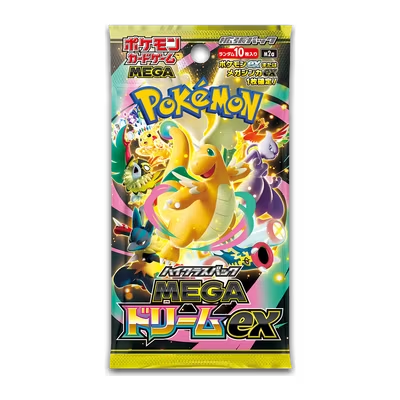
| Cards per pack | 10 English, 5 Japanese |
| Card size | Standard, 63 × 88 mm |
What you need to get started
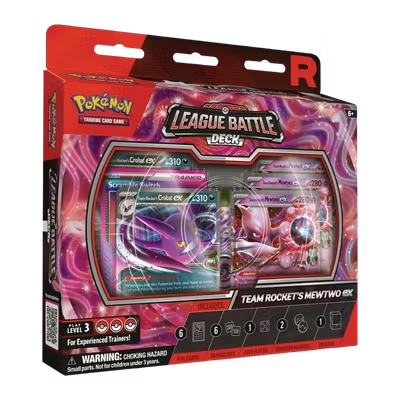
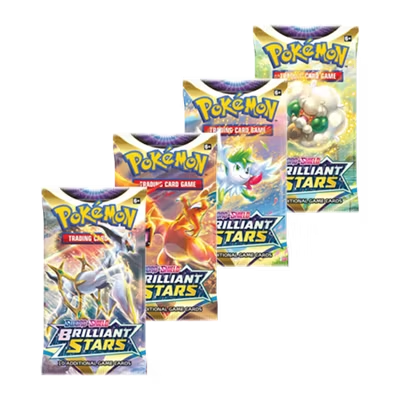
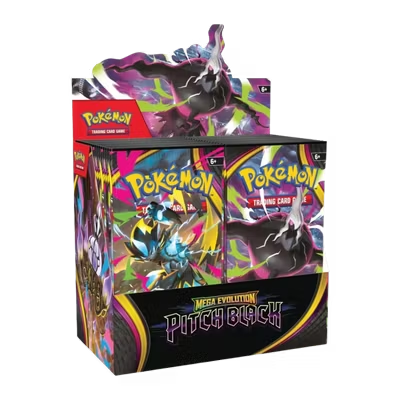
Short answer to the most common question: no, a booster display or an Elite Trainer Box is not enough to play. They give you random cards, not a working deck. What you need is a ready-made battle deck, or two if you are going to play against each other.
- A deck of 60 cards. A ready-made battle deck is the easiest way in.
- Six prizes, cards set aside from your own deck at the start.
- Damage counters and a coin or a die for random outcomes.
- Deck protectors if you play often, so the cards don't wear out.
An Elite Trainer Box contains most of the accessories around the game, but not a ready-made deck. If you just want to get started playing, a battle deck is a better first purchase.
The card types
| Pokémon | Your fighting cards. They have HP, attacks and sometimes an evolution stage. |
|---|---|
| Basic Pokémon | Played directly from your hand. Every deck must contain at least one. |
| Evolution cards | Placed on top of the right Pokémon, at the earliest the turn after it came into play. |
| Energy | The fuel that pays for attacks. One energy card per turn. |
| Items | Trainer cards you can play as many of as you like per turn. |
| Supporters | Trainer cards, only one per turn. Often the strongest effects. |
| Stadium | Trainer cards that stay in play and affect both players. |
The turn, step by step
- Draw a card. If you cannot draw, you have lost.
- Put Pokémon on the bench if you want, and evolve those that are allowed to evolve.
- Attach an energy card to a Pokémon. One per turn.
- Play trainer cards. Items unlimited, one supporter, one stadium.
- Attack with your active Pokémon, if you have the energy the attack requires. Your turn ends when you have attacked.
The setup
You have one active Pokémon that fights, and up to five on the bench. If the active one is knocked out, you choose one from the bench to take over. If you have none left, you have lost. The bench is therefore not just storage, but your insurance against the match ending.
Building your own deck
| Total | Exactly 60 cards |
|---|---|
| Pokémon | Around 12 to 20 |
| Trainer cards | Around 20 to 35 |
| Energy | Around 8 to 15 |
| Max per card | 4, except basic energy |
The ranges are guidelines and vary greatly between deck types. A common beginner mistake is to include too many different Pokémon. A deck with two or three lines that work together almost always beats a deck with twelve favourites.
Standard and which cards are allowed
Tournaments are usually played in the Standard format. What decides whether a card is allowed is not how new it is but the regulation mark in the bottom left corner of the card, and which letters are valid changes about once a year when the oldest is rotated out. Cards must be in a language allowed in your region. At Championship Series events in Europe, that means English, French, German, Italian, Portuguese or Spanish, and at other tournaments the organiser decides. Read more about English or Japanese cards.
Common beginner mistakes
- Too few basic Pokémon, which means you cannot start the match.
- Too many different evolution lines.
- Too few cards that let you draw more cards. Supporters drive the deck forward.
- Saving the supporter for next turn. You only get one per turn, and an unused one is wasted.
- Forgetting that evolving requires the card to have been in play since the previous turn.
Frequently asked questions
- Can I play with Japanese cards? Not at official tournaments in Europe. At home it works fine.
- Do the cards have to be in sleeves? No, but at tournaments all cards must look identical from the back.
- Do I need expensive cards to win? No, but the strongest decks often contain a few expensive cards.
- What do ex and VMAX mean? Stronger Pokémon that give your opponent more prizes when they are knocked out. See the guide to the cards.
- What is the fastest way to learn? Buy two battle decks and play against someone. You will know the rules after three matches.
What a prize means in practice
| Regular Pokémon | 1 prize when knocked out |
|---|---|
| ex, V and VSTAR | 2 prizes |
| VMAX and Mega ex | 3 prizes |
| The result | Three knocked-out ex or V cards can decide the whole match |
That is why ex and V cards are not automatically better. They are stronger, but cost more when they fall.
From our range
Read more about which product to buy, all Pokémon sets and the rarity levels.
Shop: Pokémon at Bangerpack.
Written by those of us who run Bangerpack. Range and prices change continuously. What applies when you read this is shown in the category.