One Piece Card Game for beginners
One Piece Card Game is Bandai's card game based on the manga and anime. It launched in 2022 and quickly became one of the best-selling trading card games in the world. Two players face off, each with a deck of fifty cards plus a leader card, and you win by breaking through your opponent's life cards and then hitting the leader. A ready-made starter deck is playable straight out of the box and is the only product you need to get started.
Quick facts
| Publisher | Bandai |
|---|---|
| Launch | 2022 |
| Number of players | 2 |
| Playing time | 35 to 60 minutes |
| Deck size | 50 cards, plus 1 leader card and 10 DON cards |
| Maximum per card | 4 copies of the same card number |
| Cards per pack | 12 |
| Packs per display | 24 |
| Card size | Standard, 63 × 88 mm |
| Win condition | Hit the leader when no life cards remain |
The rule that makes the game special
Losing life gives you cards in hand. Every time your leader is hit, you take a life card into your hand instead of just counting down, which means the player who is behind gets more material to work with. You notice the effect in every match: games turn late, and it is rarely over just because you have been hit a couple of times. It is also why an overly cautious playstyle is punished here even though it works in other card games.
What you need to get started
A starter deck contains a deck, a leader card and DON cards, so everything you need. Two of them are enough for a whole evening, and you don't need any booster packs to play: those are bought to build further or to collect. If you plan to play often, add deck protectors, since shuffling wears the cards, and a deck box for eighty cards or more if the deck is going to travel with you.
The card types
The leader is in play from the start, has life and power and decides which colours the deck may contain. Characters are your fighting cards, with a cost, power and often an ability. Events are one-time effects, and many of them can be played on your opponent's turn as a response. A stage is a location that stays in play and gives a lasting effect. DON is the resource card: ten of them in a separate pile that pay for everything you play.
The turn
- Refresh. Turn all your used cards back upright.
- Draw. Draw a card. The player who goes first skips this on the first turn.
- DON. Place DON from the pile: one on the first turn, then two per turn.
- Main. Play characters, events and stages by paying with DON. Here you can also give DON to a character or to the leader to increase their power, and attack.
- End. The turn ends and effects that last until end of turn expire.
Combat
- You choose a character or your leader to attack and pick a target.
- Your opponent may play counter cards from hand to raise the target's power.
- If the attacker has equal or higher power once everything is counted, the attack wins.
- If a character is hit, it is knocked out. If the leader is hit, the opponent takes a life card into their hand.
- If the life cards are gone and the leader is hit again, the match is over.
Counter is therefore just as important as power. The number on the edge of the card shows how much the card gives in defence, and a deck without high counter values loses to a balanced deck even when its cards look stronger.
The keywords
Rush means the character can attack the same turn it is played. Blocker can step in and take an attack aimed at something else. Double Attack takes two life cards instead of one when the leader is hit. Banish puts the life card in the trash instead of in hand, and its Trigger does not activate. Trigger is an effect that can be used for free when the card comes from the life pile, yet another advantage for the player who is behind.
The colours
| Red | Aggressive, many attacks early. |
|---|---|
| Green | Turns used cards back upright and plays wide. |
| Blue | Returns the opponent's cards to hand or deck. |
| Purple | Works with the DON pile, sacrifices resources for power. |
| Black | Lowers the opponent's costs and knocks out cheap cards. |
| Yellow | Works with the life pile and effects that trigger when you are close to losing. |
The leader card decides which colours the deck may contain, one or two. It is the first choice you make when building.
The products and set codes
Starter decks are numbered ST-01 and up and are the cheapest way in. Booster packs contain twelve cards and a display twenty-four packs. Beyond that there are double pack sets with two packs and a DON!! card, premium boosters that collect popular cards from earlier sets with new alternate illustrations, and extra boosters, which are smaller releases between the main sets.
The codes are easy to read once you know them: OP followed by a number is the main sets, ST is starter decks, EB is extra boosters, PRB is premium releases and P is promo cards handed out at events or included with products. Which sets are available to buy is listed in the One Piece category.
The rarities
C, UC and R are common, uncommon and rare. SR is super rare, SEC is secret rare and TR treasure rare. L stands for leader card. Beyond the scale there is alternate art, the same card with a different illustration, which is often the most sought-after of all, and manga rare with manga-style illustration in a very limited print run.
Building your own deck
Choose the leader first, since it determines both colours and playstyle. Then fill with characters along an even cost curve: a few cheap, several in the middle and a handful of expensive ones. Make sure many cards have a high counter value, stick to a maximum of four copies of the same card number, and test against a ready-made starter deck before you buy more packs.
Beginner mistakes follow from the same thing. A deck with only expensive characters stands still in the first turns. A deck without counter loses the exchanges. Giving away DON to attacks every turn feels strong, but they stay with the card and are missing on your opponent's turn. Saving your life cards is also wrong, since hits give you material. And three colours simply isn't possible: the leader allows one or two.
Frequently asked questions
- Can I play with Japanese cards? The rules are the same, but at tournaments in Europe the leader card and the deck must be English or French cards.
- Do I need booster packs? No. Two starter decks are enough to play.
- How many DON cards do I have? Ten, and they sit in a separate pile beside the deck.
- Can the leader attack? Yes, the leader attacks just like a character.
- What happens if the deck runs out? The player whose deck runs out loses immediately.
From our range
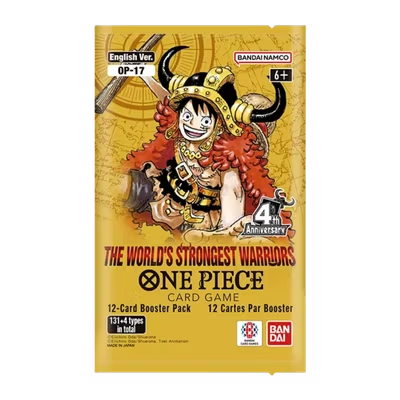 Trading card games
One Piece OP-17 The World's Strongest Warriors – Booster
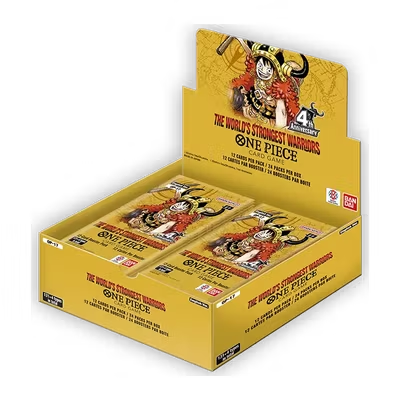 Trading card games
One Piece OP-17 The World's Strongest Warriors – Booster Display
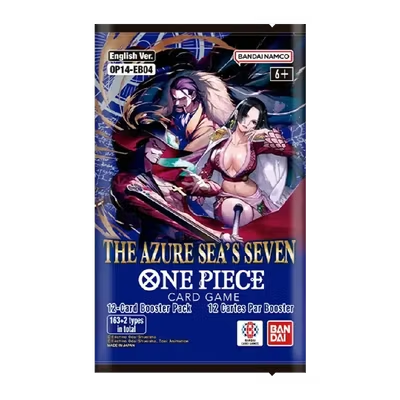 Trading card games
One Piece OP-14 The Azure Sea's Seven – Booster
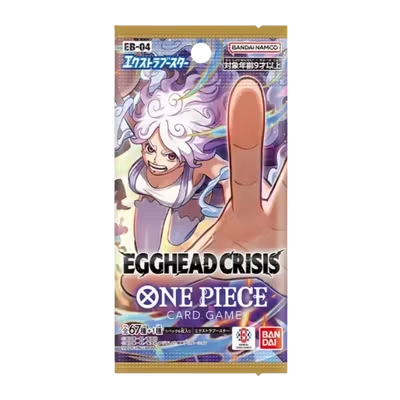 Trading card games
One Piece EB-04 Egghead Crisis – Booster (JP)
Read more about the pack types, the rarities and how to protect your cards.
Shop: One Piece at Bangerpack.
Written by those of us who run Bangerpack. Range and prices change continuously. What applies when you read this is listed in the category.